
Port Houston | Market Report Q2 2026
OVERVIEW
PORT HOUSTON: DRIVING INDUSTRIAL AND LOGISTICS DEMAND
Port Houston remains the primary catalyst for Southeast Houston's industrial real estate market, supporting sustained demand across logistics, warehousing, distribution, import/export, and manufacturing. Its scale, multimodal connectivity, and continued infrastructure investment reinforce Houston's position as one of the nation's premier freight gateways, driving long-term industrial growth throughout the region.
CHANNEL CAPACITY AND TERMINAL EFFICIENCY
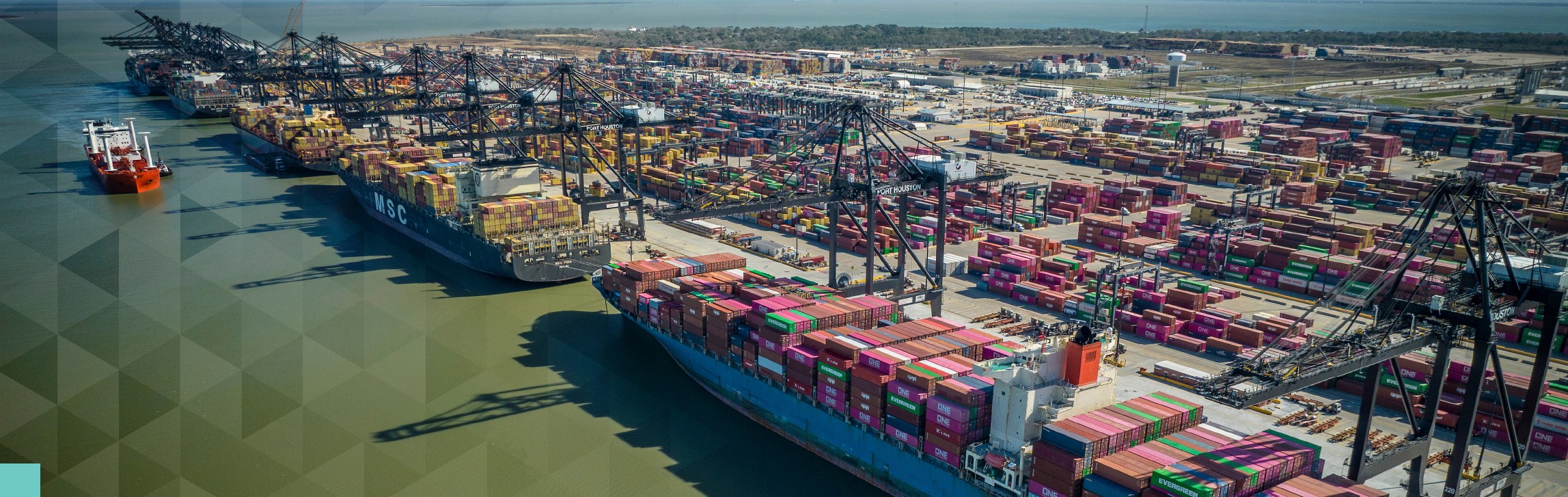
Continued investments in terminal modernization, channel improvements, and technology are enhancing throughput capacity, supply chain visibility, and operational efficiency across the Port. At the center of this network is the 52-mile Houston Ship Channel, the busiest waterway in the United States by tonnage. In 2023, the Channel handled 309.5 million short tons of cargo, representing approximately 12% of all U.S. waterborne trade, while Port Houston established a new record by handling 4.14 million TEUs in 2024, reinforcing its expanding role in global commerce. Port Houston continued its record-setting performance in 2025, handling more than 54.5 million short tons of cargo across its public terminals, a 3% increase from the prior year, while container volumes reached a record 4.3 million TEUs. These results reinforce the Port's expanding role in global trade and continue to support long-term industrial demand throughout Southeast Houston.
MARKET CONDITIONS
Port-driven activity continues to anchor industrial demand within Southeast Houston, the region's most strategically important logistics corridor. As of Q2 2026, the submarket totaled approximately 86.3 million square feet of inventory, with direct vacancy at 11.3% and weighted NNN asking rents averaging $0.73 per square foot. Although vacancy has increased as recently completed speculative projects enter the market, leasing activity and net absorption continue to reflect healthy demand from logistics, manufacturing, and distribution users tied to Port operations. Looking ahead, Southeast Houston remains one of the nation's most strategically positioned industrial submarkets. Continued Port Houston investment, resilient trade activity, and long-term population and economic growth are expected to support industrial demand as newly delivered space is absorbed through the balance of 2026.
PORT HOUSTON’S GROWTH CONTINUES TO TRANSLATE DIRECTLY INTO INDUSTRIAL DEMAND, POSITIONING SOUTHEAST HOUSTON AS ONE OF THE MOST STRATEGICALLY IMPORTANT LOGISTICS CORRIDORS IN THE U.S.
PROJECT 11 AND TEU
PROJECT 11 UPDATE
Project 11, the Houston Ship Channel Expansion, remains one of the most significant long-term infrastructure investments supporting Port Houston and Southeast Houston's industrial market. Designed to deepen and widen the Houston Ship Channel, the project will improve vessel safety, increase transit efficiency, and accommodate larger vessels calling on the Port.
Port Houston has indicated that roughly 70% of the project has been completed, with full completion currently expected in 2029. As additional channel segments are completed, Project 11 is expected to further strengthen Port Houston's competitive position while supporting long-term demand for logistics, manufacturing, and port-oriented industrial development.
WHY PROJECT 11 MATTERS
+ Expands channel capacity for larger vessels
+ Improves safety and transit efficiency
+ Supports long-term port competitiveness
+ Supports long-term industrial growth in Southeast Houston

PORT HOUSTON BY THE NUMBERS
+ 4.3 million TEUs handled in 2025 (record)
+ 54.5 million short tons handled at public terminals
+ 52-mile Houston Ship Channel
+ #1 U.S. waterway by tonnage
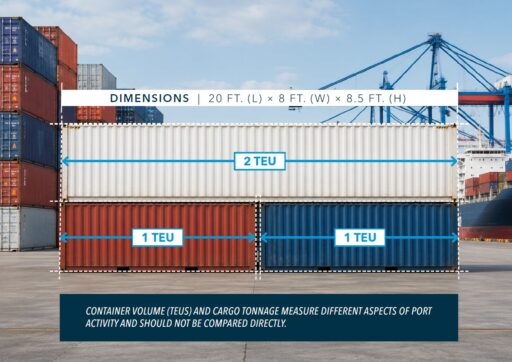
TEUs provide a consistent way to compare container
throughput across global ports regardless of cargo type
or vessel size.
Port and cargo volumes are also measured by weight,
typically reported in short tons (2,000 pounds)
PORT HOUSTON TEUs
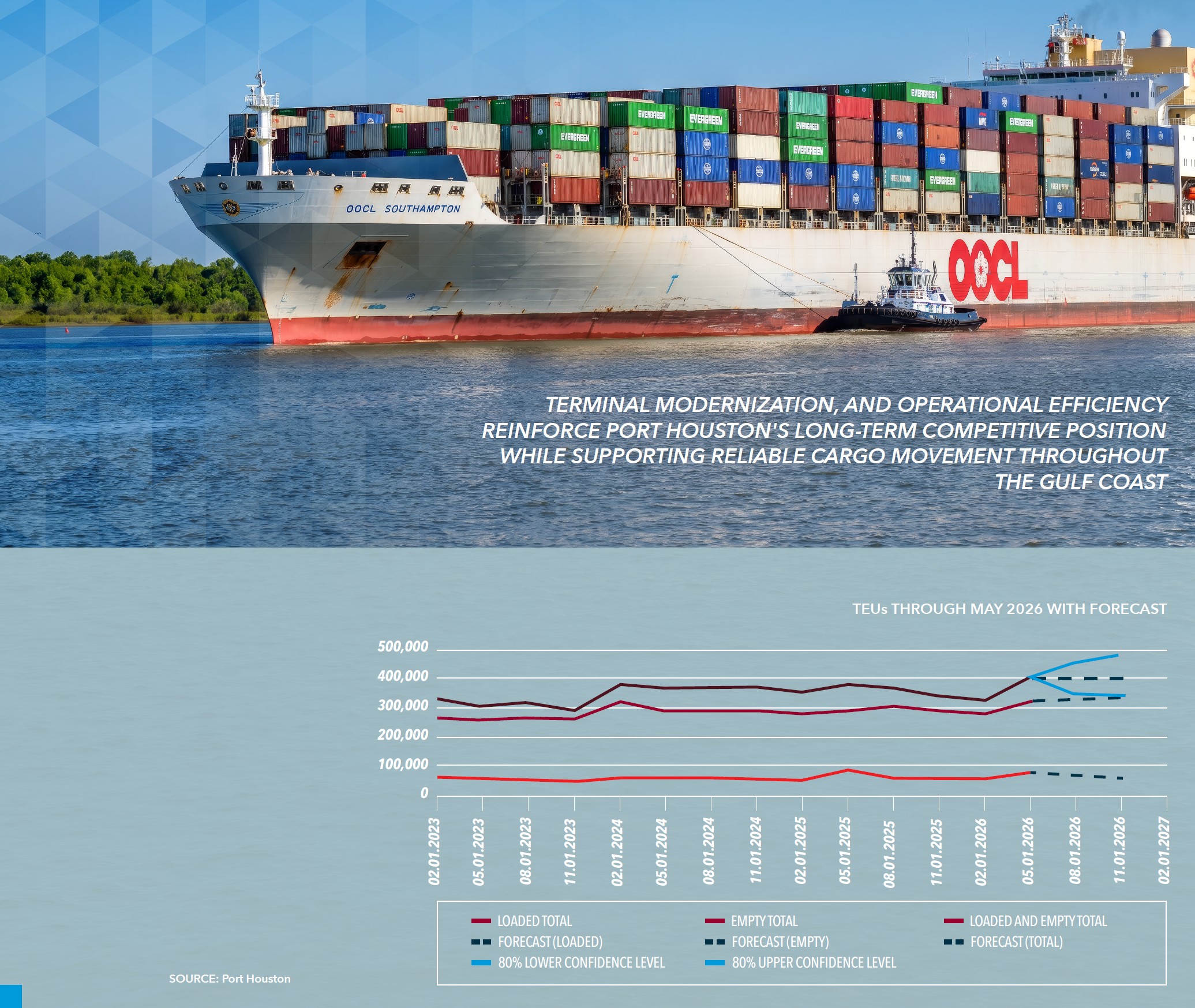
Port Houston continues to serve as one of the nation's leading container gateways and a primary driver of industrial demand across Southeast Houston. Through May 2026, the Port handled nearly 1.9 million TEUs, reflecting stable cargo volumes following several years of exceptional expansion in container traffic. While year-to-date container activity remained relatively flat compared with the same period in 2025, current volumes continue to reflect healthy trade fundamentals supported by a diversified mix of import and export cargo.
Continued investments in channel improvements, terminal modernization, and operational efficiency reinforce Port Houston's long-term competitive position while supporting reliable cargo movement throughout the Gulf Coast. Combined with strong regional transportation infrastructure and continued manufacturing activity, these investments position the Port to accommodate future cargo growth while maintaining its role as one of the country's premier logistics gateways.
Looking ahead, port-driven industrial demand is expected to remain healthy through the balance of 2026. As global trade patterns continue to normalize, sustained cargo volumes should support leasing activity, absorption, and long-term demand for modern distribution, cross-dock, and port-oriented industrial facilities throughout Southeast Houston.
PORT HOUSTON
+ 5th ranked U.S. container port by total TEUs
+ Handles 73% of U.S. Gulf Coast container traffic
+ Largest Texas port with 97% market share in containers
+ Helps generate 979,500 Texas jobs from terminal activity
HOUSTON SHIP CHANNEL
+ #1 Port for waterborne tonnage
+ Largest U.S. petrochemical complex
+ Supports 1.54M Texas jobs and 3.37M U.S. jobs
+ Supports economic activity $439B Texas and $906B U.S.
"PORT HOUSTON ISN'T JUST MOVING CARGO. IT IS DRIVING LONG-TERM INDUSTRIAL GROWTH ACROSS SOUTHEAST HOUSTON. CONTINUED INVESTMENT IN THE PORT AND SHIP CHANNEL REINFORCES HOUSTON'S POSITION AS ONE OF NORTH AMERICA'S PREMIER LOGISTICS MARKETS"
JUSTIN TUNNELL, SIOR
PRINCIPAL
OVERALL SUBMARKET STATISTICS
WHAT COULD IMPACT PORT-DRIVEN DEMAND
+ Changes in global trade policy and tariff activity
+ Port cargo volumes and shipping route realignments
+ Timing of lease-up for newly delivered logistics facilities
SOUTHEAST SUBMARKET
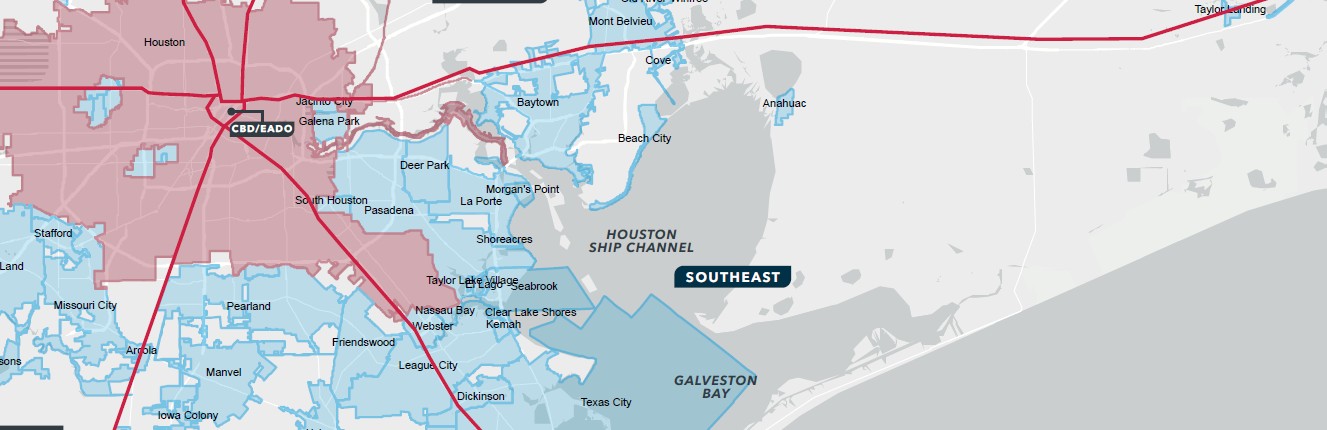
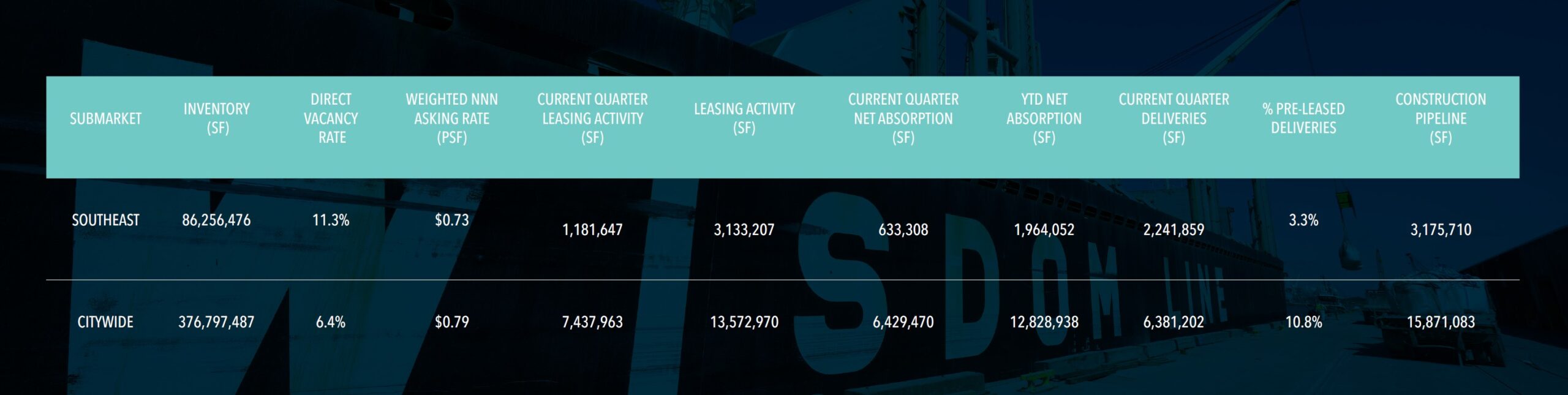
The Southeast Houston industrial submarket remained one of the region's most strategically important logistics hubs during Q2 2026, supported by its direct access to Port Houston and continued demand from logistics, manufacturing, and distribution users. Total inventory increased to approximately 86.3 million square feet, while direct vacancy rose to 11.3% as a significant volume of newly completed speculative space entered the market. Despite the increase in availability, weighted NNN asking rents remained competitive at $0.73 per square foot, reflecting the submarket's long-term appeal.
Quarterly leasing activity totaled approximately 1.2 million square feet, while net absorption reached 633,308 square feet. Deliveries exceeded 2.2 million square feet during the quarter, contributing to higher vacancy as newly completed buildings continue through the lease-up process.
Development activity remains active, with approximately 3.2 million square feet under construction. Although near-term vacancy may remain elevated as recent deliveries stabilize, the Southeast submarket continues to benefit from durable port-driven demand and remains well positioned for long-term growth.
CITYWIDE MARKET
Houston's industrial distribution market continued to demonstrate healthy fundamentals during Q2 2026 despite elevated development activity. Total inventory increased to approximately 376.8 million square feet, while direct vacancy edged up to 6.4% as recently completed speculative projects entered the market.
Leasing activity remained strong, totaling 7.4 million square feet during the quarter, while year-to-date net absorption reached 12.8 million square feet, reflecting continued tenant demand across the region.
Although deliveries continued to outpace absorption modestly, the market remains fundamentally balanced as new supply is steadily absorbed. Developers have become increasingly disciplined, with a moderating construction pipeline and improved preleasing levels helping maintain longterm market stability.
Houston continues to benefit from strong port activity, sustained population growth, and its role as one of the nation's premier logistics and distribution hubs. These long-term demand drivers continue to support healthy leasing activity and position the market for continued stability through the balance of 2026.
SOUTHEAST SUBMARKET
The Southeast Houston industrial submarket remained one of the region's most strategically important logistics hubs during Q2 2026, supported by its direct access to Port Houston and continued demand from logistics, manufacturing, and distribution users. Total inventory increased to approximately 86.3 million square feet, while direct vacancy rose to 11.3% as a significant volume of newly completed speculative space entered the market. Despite the increase in availability, weighted NNN asking rents remained competitive at $0.73 per square foot, reflecting the submarket's long-term appeal.
Quarterly leasing activity totaled approximately 1.2 million square feet, while net absorption reached 633,308 square feet. Deliveries exceeded 2.2 million square feet during the quarter, contributing to higher vacancy as newly completed buildings continue through the lease-up process.
Development activity remains active, with approximately 3.2 million square feet under construction. Although near-term vacancy may remain elevated as recent deliveries stabilize, the Southeast submarket continues to benefit from durable port-driven demand and remains well positioned for long-term growth.
CITYWIDE MARKET
Houston's industrial distribution market continued to demonstrate healthy fundamentals during Q2 2026 despite elevated development activity. Total inventory increased to approximately 376.8 million square feet, while direct vacancy edged up to 6.4% as recently completed speculative projects entered the market.
Leasing activity remained strong, totaling 7.4 million square feet during the quarter, while year-to-date net absorption reached 12.8 million square feet, reflecting continued tenant demand across the region.
Although deliveries continued to outpace absorption modestly, the market remains fundamentally balanced as new supply is steadily absorbed. Developers have become increasingly disciplined, with a moderating construction pipeline and improved preleasing levels helping maintain longterm market stability.
Houston continues to benefit from strong port activity, sustained population growth, and its role as one of the nation's premier logistics and distribution hubs. These long-term demand drivers continue to support healthy leasing activity and position the market for continued stability through the balance of 2026.
MAJOR U.S. PORT UPDATE
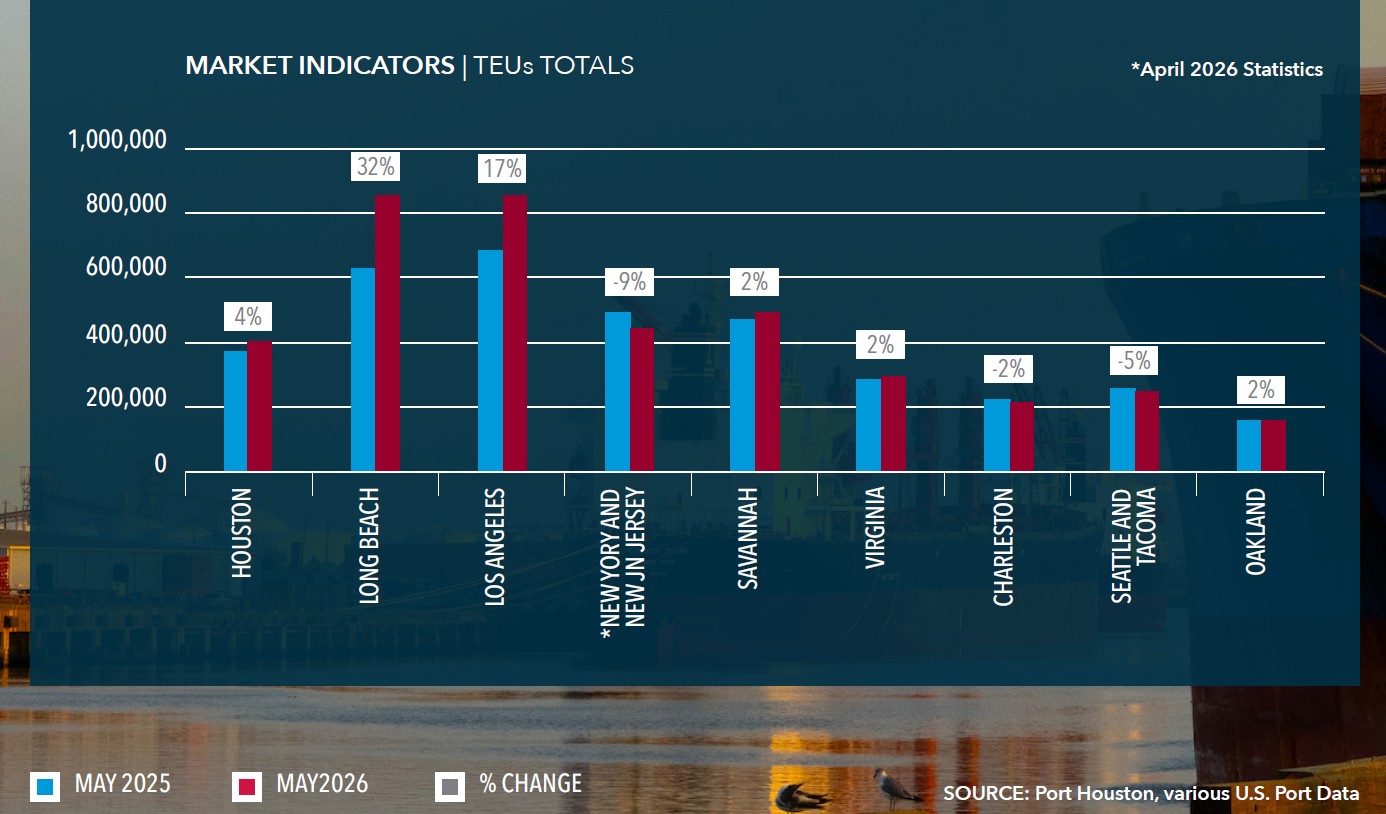
Major U.S. port activity in May 2026 reflected continued strength in containerized trade, with most of the nation's largest gateways reporting year-over-year cargo growth. Port Houston handled 398,322 TEUs, a 4% year-over-year increase, reinforcing its position as one of the country's most stable and consistently growing container ports.
While West Coast ports posted the strongest gains during the month, led by Long Beach (+32%) and Los Angeles (+17%), growth remained positive across much of the Gulf and East Coast. Savannah (+2%), Virginia (+2%), Houston (+4%), and Oakland (+2%) also recorded increases, while the Port of New York & New Jersey (-9%) and Seattle/Tacoma (-5%) experienced declines.
For Houston, the most important takeaway is continued consistency rather than short-term volatility. The Port continues to benefit from a diversified cargo base, expanding petrochemical and manufacturing activity, strong regional population growth, and its strategic role within Gulf Coast supply chains. These structural advantages continue to support long-term demand for industrial distribution space throughout the region.
Looking ahead, global trade conditions remain constructive, although evolving tariff policies, geopolitical developments, and periodic supply chain disruptions continue to create uncertainty. Despite these risks, Houston remains well positioned as one of the nation's premier logistics gateways, supported by
resilient cargo volumes and durable long-term industrial demand.
PORT HOUSTON ACTIVITY UPDATE
Port Houston continued to demonstrate stable cargo performance through the second quarter of 2026 despite evolving global trade patterns. While trade policy changes, geopolitical uncertainty, and seasonal cargo fluctuations influenced shipping activity during the first half of the year, Port Houston maintained healthy container volumes and continued to benefit from its diversified cargo base and strategic Gulf Coast location.
MARKET CONDITIONS
Through May 2026, Port Houston handled nearly 1.9 million TEUs, with May container volumes increasing 4% year over year. Although year-to-date growth remained relatively modest, container activity continues to reflect stable trade fundamentals following several years of exceptional expansion. This steady performance supports continued demand for logistics, manufacturing, and distribution facilities throughout Southeast Houston.
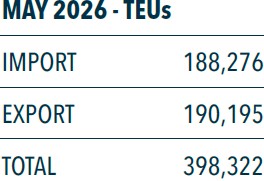
In May 2026, Port Houston processed 398,322 TEUs, representing a 4% increase year over year and a 13% increase from April, reflecting continued strength in container activity.
MARKET SIGNALS
+ Export activity remains resilient despite softer imports
+ Steel trade continues to reflect global market volatility
+ Container activity remains balanced across imports and exports
IMPORT TONNAGE PERFORMANCE
+ May 2025/May 2026
+ General -63%
+ Steel -7%
+ Dry Bulk 79%
+ Liquid Bulk 0%
+ Container 13%
TOTAL IMPORT 11%
EXPORT TONNAGE PERFORMANCE
+ May 2025/May 2026
+ General -65%
+ Steel -14%
+ Dry Bulk -33%
+ Liquid Bulk 8%
+ Container 1%
TOTAL IMPORT 2%
MAJOR U.S. PORT COMPARISON
MAJOR U.S. PORT TRENDS
Container activity strengthened across most major U.S. gateways during the first five months of 2026, with approximately 67% of the nation's largest ports reporting year-over-year growth. West Coast ports rebounded strongly following a softer first quarter, while Houston continued to post consistent gains, reinforcing its position as one of the Gulf Coast's most reliable container gateways.
LOOKING AHEAD
Global trade conditions remain constructive, although evolving tariff policies, geopolitical developments, and changing shipping patterns continue to influence cargo flows. Despite these uncertainties, Port Houston's diversified trade base, ongoing infrastructure investments, and strategic location continue to support long-term industrial demand and reinforce Southeast Houston's role as one of the nation's premier logistics markets.
APPROXIMATELY 67% OF THE NATION'S LARGEST PORTS REPORTING YEAR-OVER-YEAR GROWTH
INTERNATIONAL IMPORT TRADE
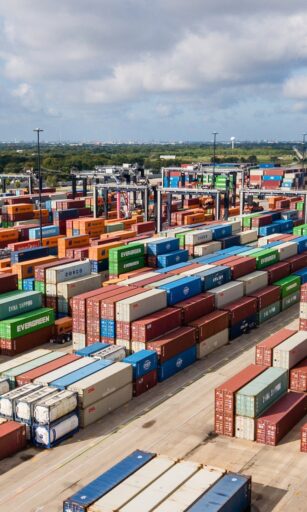
Port Houston continues to serve as one of the nation's most important international trade gateways, connecting Houston's industrial market with manufacturers, suppliers, and consumers around the world. Its diverse import network supports logistics, manufacturing, energy, and distribution users while reinforcing Southeast Houston's role as a premier supply chain hub.
IMPORT DYNAMICS
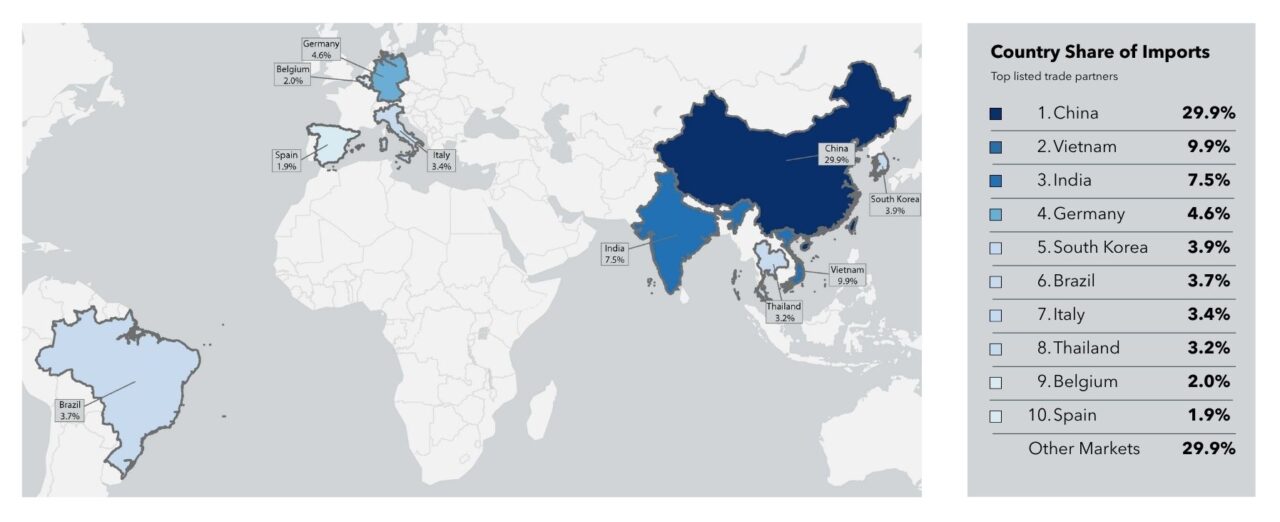
China remains Port Houston's largest trading partner by container volume, accounting for approximately 34.5% of inbound cargo, while Mexico continues to lead by cargo weight, reflecting the strength of cross-border manufacturing and industrial supply chains. Machinery remains the Port's largest import category, supporting Houston's manufacturing, energy, and industrial sectors, while consumer goods continue to drive regional distribution activity.
EMERGING TRADE PATTERNS
Although China remains the dominant import partner, Vietnam has been the only major trading partner to record sustained growth in import tonnage since 2024, highlighting the continued diversification of global supply chains. This shift reinforces Houston's ability to adapt to changing trade patterns
while maintaining its role as one of North America's leading logistics gateways.
Import and Export Q2 Port Report maps - 1
INTERNATIONAL EXPORT TRADE
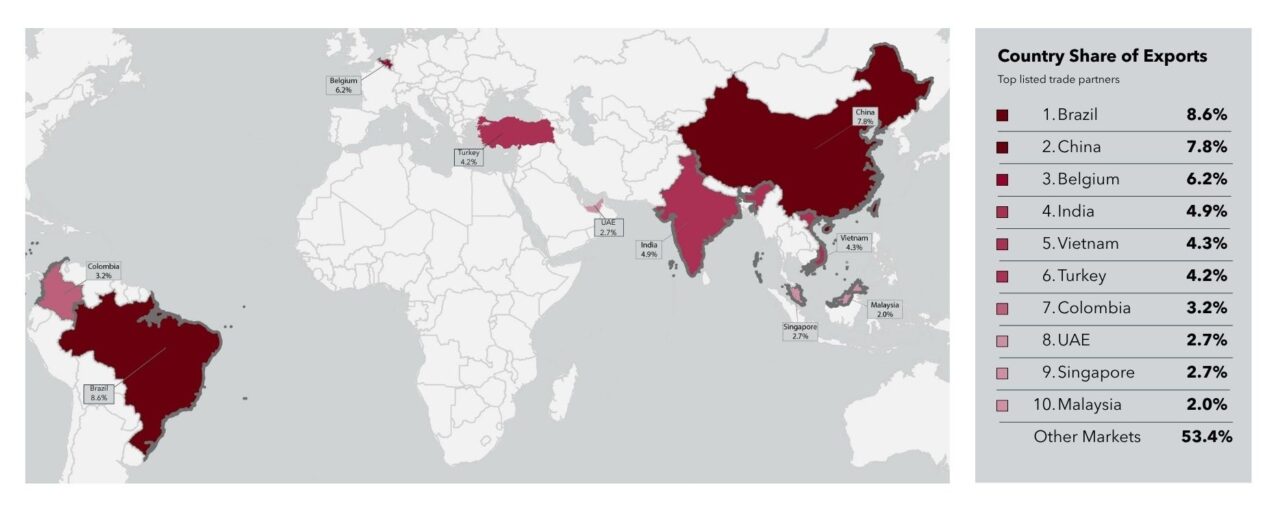
Houston's export profile reflects the region's position as one of the nation's leading manufacturing, petrochemical, and energy production centers. Unlike imports, which are more concentrated among a handful of major trading partners, Houston's exports are broadly distributed across global markets, reinforcing the Port's strategic role in international commerce.
EXPORT DYNAMICS
Europe and Far Asia remain the Port's largest export destinations, demonstrating Houston's strong integration with global manufacturing and industrial supply chains. Resins and plastics continue to dominate export volumes, underscoring the region's competitive advantage in petrochemical production and value-added manufacturing.
TRADE BALANCE
Houston's international trade profile highlights a complementary relationship between imports and exports. Consumer goods continue to flow into the region to support domestic demand, while petrochemical products, resins, plastics, and other manufactured goods move efficiently through Port Houston to global markets. This balanced trade profile reinforces Southeast Houston's position as one of North America's most important industrial and logistics centers.
Import and Export Q2 Port Report maps - 2
FOREIGN TRADE ZONE
A Foreign Trade Zone (FTZ) is a designated area that U.S. Customs and Border Protection treats as outside U.S. customs territory for tariff and duty purposes. This designation provides companies engaged in international trade with greater operational flexibility and potential cost advantages, supporting trade, logistics, and manufacturing activity within the U.S.
KEY BENEFITS
+ Merchandise may enter the zone without formal customs entry
+ Duties and certain federal taxes are assessed only when goods enter U.S. commerce
+ No duties are paid on goods that are re-exported
+ Potential relief from select quotas and trade restrictions, depending on product type
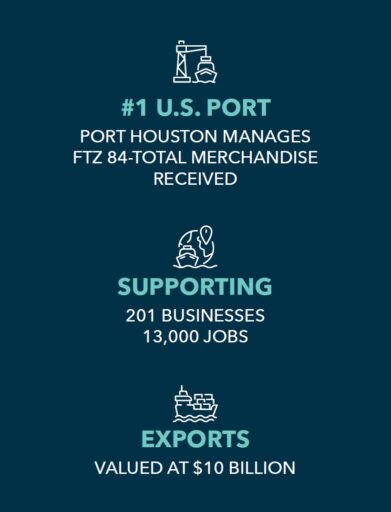
PORT HOUSTON FTZ 84
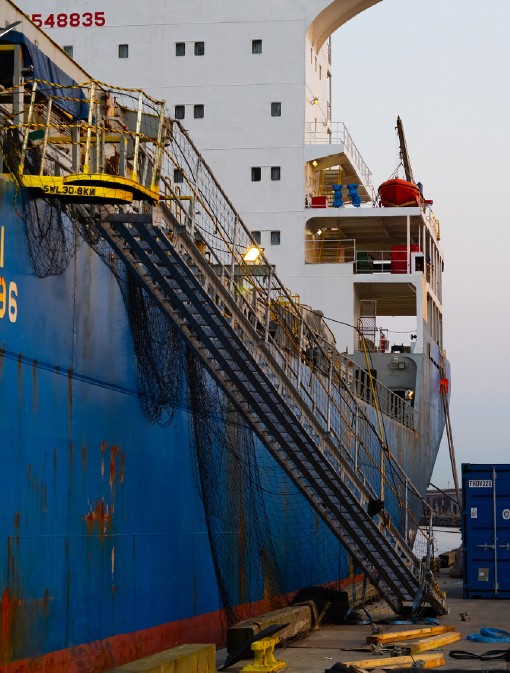
FTZ 84 encompasses Port Houston and is one of the largest FTZ networks in the United States, supporting logistics, distribution, manufacturing, petrochemical, and energy industries.
+ Duty and tariff efficiencies, including elimination of duties on reexported goods
+ Streamlined customs processing and improved inventory control
+ Direct access to the Houston Ship Channel and strong regional connectivity via highway, rail, and air cargo networks
HOW IT WORKS
+ Goods entering an FTZ are not immediately subject to U.S. customs duties
+ Duties are paid only when goods leave the zone and enter U.S. commerce
+ Goods exported directly from the FTZ are not subject to U.S. duties
KEY TAKEAWAYS FOR INDUSTRIAL REAL ESTATE
PORT HOUSTON CONTINUES TO PROVIDE A DURABLE LONG-TERM DEMAND
DRIVER FOR SOUTHEAST HOUSTON INDUSTRIAL REAL ESTATE
RECENT SPECULATIVE DELIVERIES HAVE INCREASED VACANCY,
BUT CONTINUED PORT ACTIVITY SUPPORTS LONG TERM ABSORPTION
TENANT DEMAND REMAINS STRONGEST FOR MODERN LOGISTICS,
CROSS-DOCK, AND PORT-ORIENTED DISTRIBUTION FACILITIES
PROJECT 11 AND CONTINUED INFRASTRUCTURE INVESTMENT REINFORCE HOUSTON'S LONG-TERM COMPETITIVE ADVANTAGE
AS ONE OF NORTH AMERICA'S PREMIER LOGISTICS GATEWAYS
ABOUT LEE & ASSOCIATES
INDUSTRIAL ADVISORS
MIKE SPEARS, SIOR,CCIM
MANAGING PRINCIPAL
MASON ALSBROOKS, SIOR, CCIM
EXECUTIVE PRINCIPAL
THOMAS LEGER, SIOR
EXECUTIVE PRINCIPAL
PRESTON YAGGI, SIOR,CCIM
EXECUTIVE PRINCIPAL
CHASE CRIBBS, SIOR
PRINCIPAL
RICHARD GLASS, SIOR
PRINCIPAL
JUSTIN TUNNELL, SIOR
PRINCIPAL
PATRICK WOLFORD, SIOR, CCIM
PRINCIPAL
STEPHEN KUPER
VICE PRESIDENT
CLINT HANKLA
SENIOR DIRECTOR
AUSTIN DABBS
DIRECTOR
MATTHEW CLAY
DIRECTOR
TROY COLLINS
DIRECTOR
ANDRES CREXIELL
DIRECTOR
JASON ENGLISH
DIRECTOR
JOHN GAZZOLA
DIRECTOR
JEFF KUPER
DIRECTOR
THOMAS MONAGHAN
DIRECTOR
STUART PETERSON
DIRECTOR
CONRAD CHAMBERS
ASSOCIATE
MATT JORGENSEN
ASSOCIATE
TANNER KINCANNON
ASSOCIATE
ANDREW MCGUIRE
ASSOCIATE
MARCO MILOSAVLJEVIC
ASSOCIATE
FELIPE RODRIGUEZ
ASSOCIATE
CHASE TAYLOR
ASSOCIATE
OFFICE ADVISORS
CHRIS LEWIS, SIOR
MANAGING PARTNER
BILL INSULL, CCIM
PRINCIPAL
DREW LEWIS
PRINCIPAL
TRAVIS TAYLOR
PRINCIPAL
BLAKE R. VIRGILIO, SIOR, CCIM
PRINCIPAL
WADE BOWLIN
EXECUTIVE VICE PRESIDENT
COURTNEY BUCKOUT
DIRECTOR
BLAINE SINCLAIR
DIRECTOR
JEFF CHARBONNEAU
ASSOCIATE
ERIK JORGENSEN
ASSOCIATE
MAX WELCH
ASSOCIATE
RETAIL ADVISORS
BRANDI DEES
SENIOR VICE PRESIDENT
MCKAILY CARPENTER
ASSOCIATE
LOCAL EXPERTISE. INTERNATIONAL REACH.
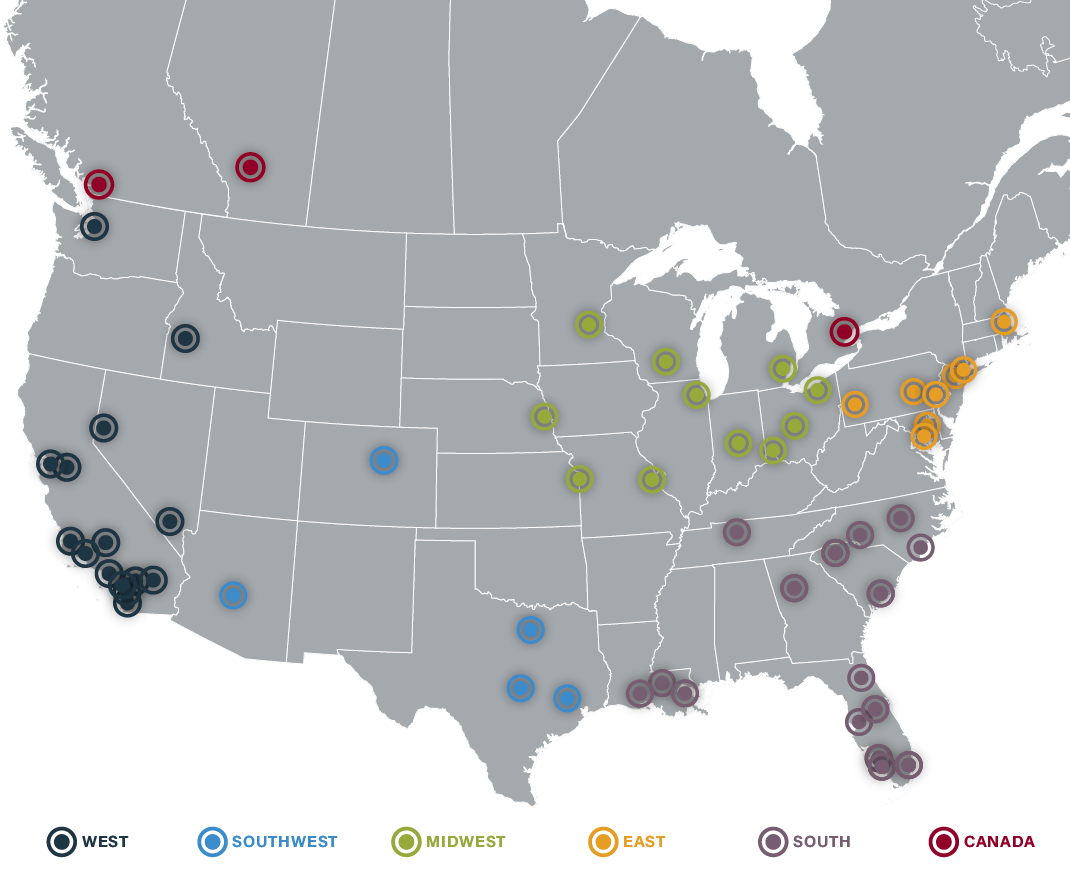
With offices in 85+ markets across North America, Lee & Associates has the ability to deliver first-class services to our clients both locally and internationally.
THE LEE ADVANTAGE
Lee & Associates – Houston is a fully-integrated commercial real estate company with unrivaled market knowledge and an unwavering commitment to integrity and excellence. Our business-minded brokers specialize in office, industrial, and land real estate investments. The brokerage is uniquely qualified to support our client’s real estate needs in Houston, across Texas, and throughout the US.
RESEARCH TEAM
- MARY DOETTERL | RESEARCH DIRECTOR | [email protected]
- NATHAN KRUEGER | RESEARCH ANALYST
- JASMINE HUANG | JUNIOR RESEARCH ANALYST